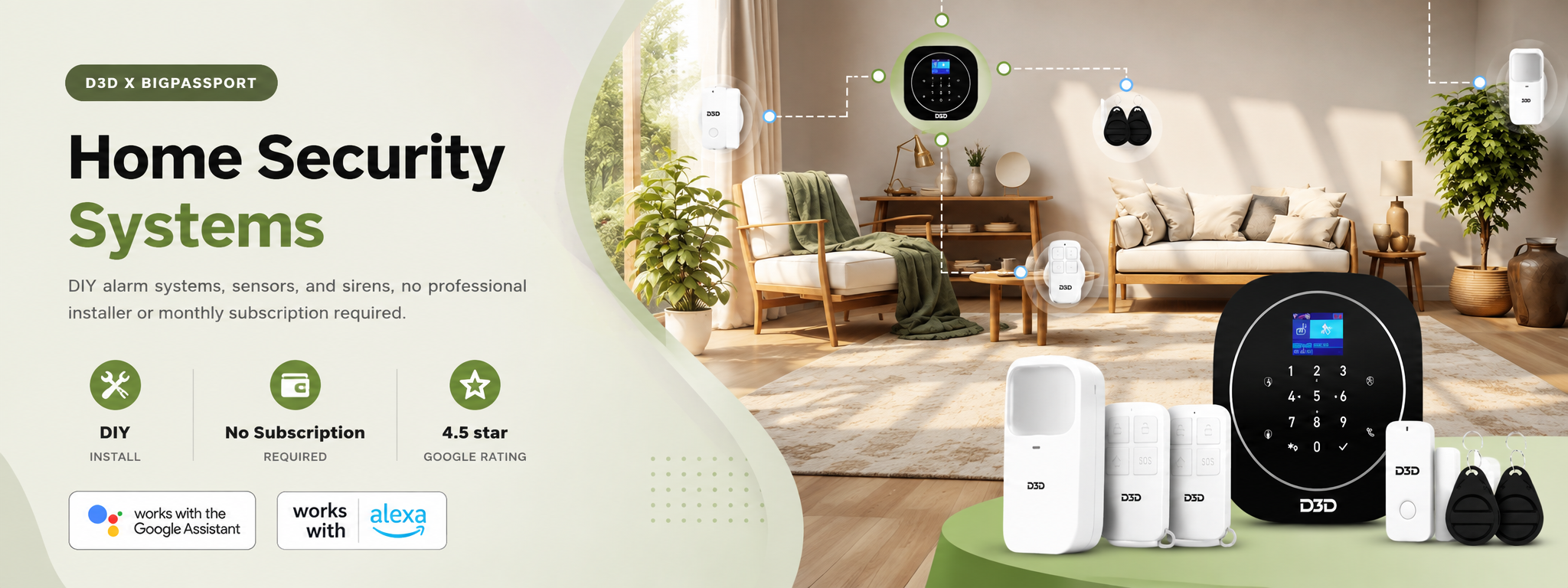

Setting up home security in India often means choosing between an expensive professional installation contract or leaving your home genuinely unprotected, with very little practical middle ground. This collection covers D3D's wireless DIY security range: an alarm hub, door and window sensors, motion sensors, and a strobe siren, all designed to pair together without professional installation or a monthly monitoring fee. Sensors mount with adhesive or light screws, which makes the whole system landlord-friendly for rental properties as well as owned homes. Whether you're securing a single apartment entry point or building out coverage for a full house, you can start small here and expand exactly as needed.
Shop Home Security
Alarm hubs, sensors, and sirens for DIY installation
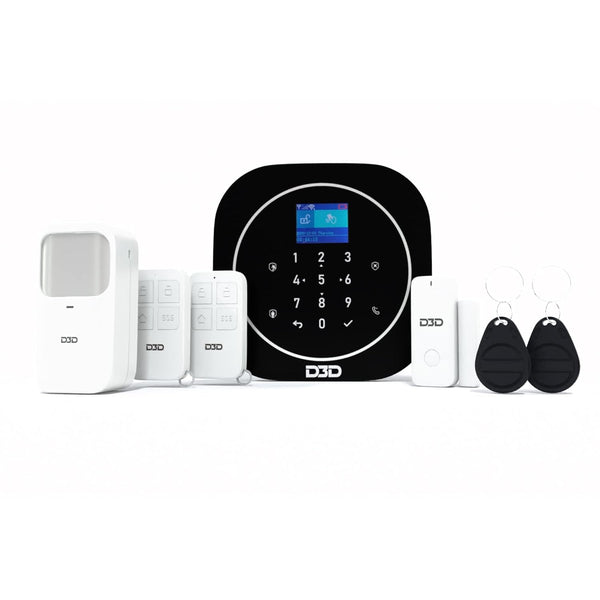

How a DIY System Works
An alarm hub plus sensors around your home
Door & Window Sensors
Detect when an entry point opens, place on every ground-floor door and window.
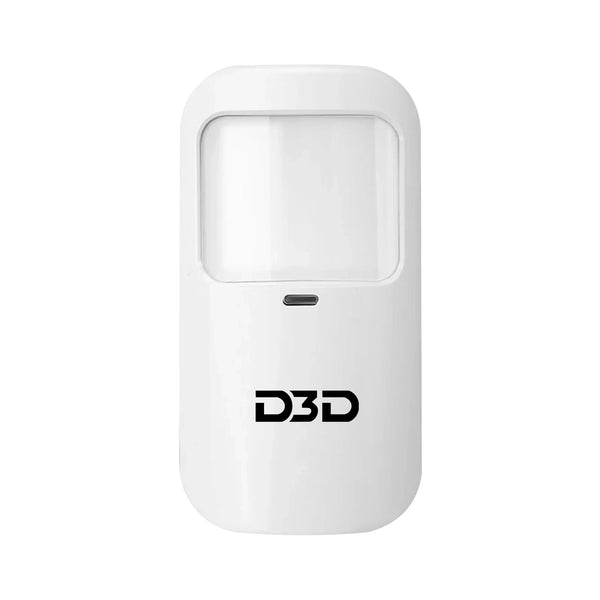
Motion Sensors
Best placed in hallways or main rooms where an intruder would need to pass.
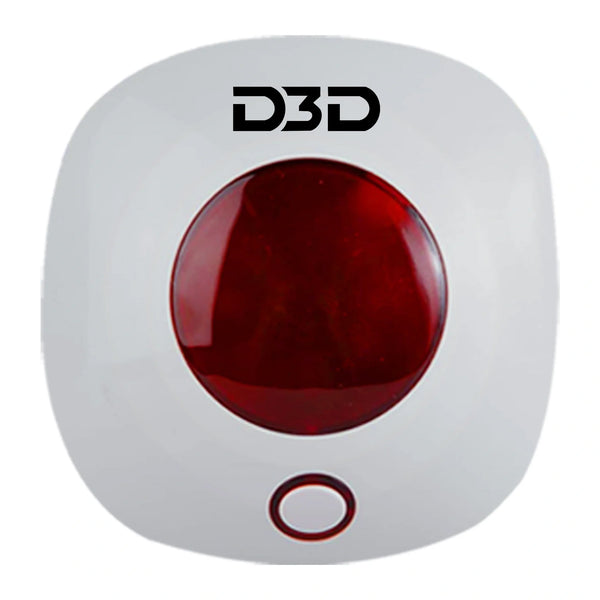
Siren
A loud, well-placed siren is often the biggest deterrent in a DIY system.
Why Go DIY
No Installer, No Subscription
A basic system centers on an alarm hub that receives signals from sensors placed around your home. Sensors mount with adhesive or basic screws, and the hub pairs with them without any wiring, no professional installation or monthly monitoring fee required.
Start Small, Expand Later
Many households start with sensors on main entry points and a single motion sensor, then expand coverage over time as needed.
Buying Guide
Choosing your setup
Where to Place Sensors
Place door and window sensors on every ground-floor entry point. Motion sensors work best in hallways or main rooms rather than every room individually.
Siren Placement
A loud, well-placed siren is often the biggest deterrent in a DIY system, audible alarms alone stop many break-in attempts before they progress.
Frequently Asked Questions
Do I need a professional to install this?
No, D3D systems are designed for DIY setup, sensors mount with adhesive or basic screws, and the hub pairs with them without any wiring.
Is a monthly monitoring subscription required?
No. The base system sounds a local alarm without requiring an ongoing subscription.
How many sensors do I need for a typical home?
A common starting point is sensors on all ground-floor doors and windows, plus one motion sensor covering a central hallway or living area.